Jonathan Glazer · Christian Friedel, Sandrra Hüller, Johann Kathaus · PG-13 · 1h 45m · 2023
“Zone of Interest” is a film written and directed by Jonathan Glazer, focusing on the daily life of a German family living next to the Auschwitz camp during World War II. The film is adapted from Martin Amis’s 2014 novel and drew attention by winning the “Grand Prix” and FIPRESCI awards at the 76th Cannes Film Festival.
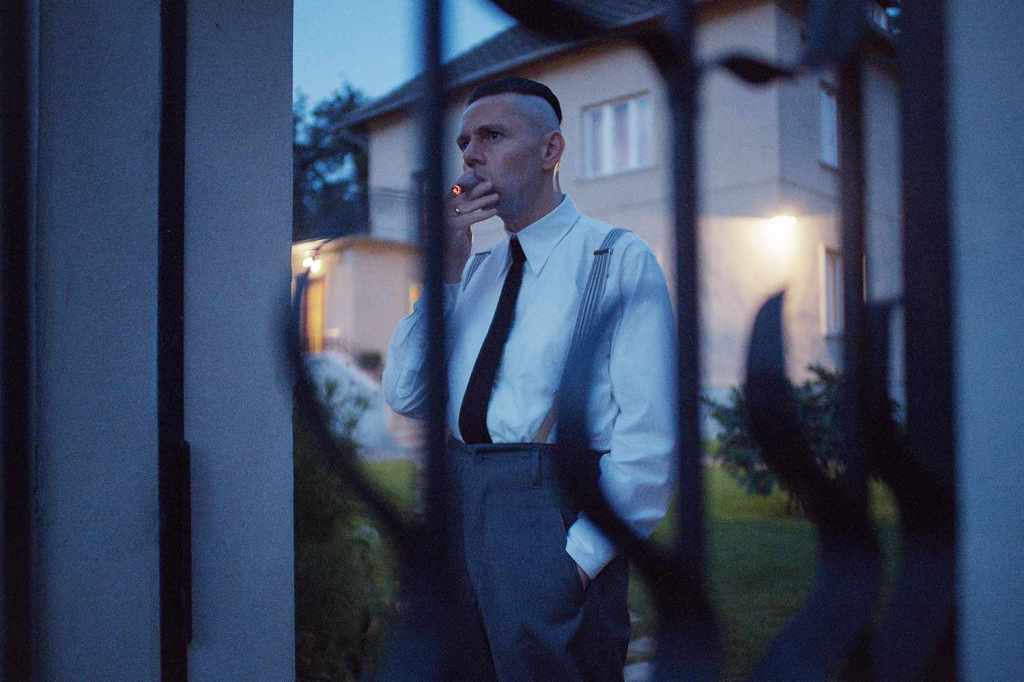
Glazer shines a light on the life of Auschwitz commander Rudolf Höss and his family, who lived in luxury quarters adjacent to the concentration camp, narrating the monotonous barbarity of the Holocaust. This approach offers a perspective that is distinct from the Holocaust films made to date.
The opening scene of the film plunges the viewer into a dark screen accompanied by indistinct sounds from the background. This, from the very first moment, signals that “Zone of Interest” promises an unusual and innovative experience beyond traditional cinema. This choice is merely a precursor to the visual and auditory allure that will continue throughout the film.
The film is built on the contrast between the Höss family’s “dream-like” life and the brutality of the camp right next to them. Instead of directly showing the horrors of the camp, Glazer conveys it through screams and other sounds heard in the background. This method profoundly affects the viewer, delivering a powerful message about the “banality of evil” that Hannah Arendt described.
The director’s collaboration with cinematographer Łukasz Żal, known for his successful work in Pawel Pawlikowski’s films Ida and Cold War, leads to visual choices that evoke Stanley Kubrick’s cinema with symmetric and distant framing. The director aims and succeeds in building a thick wall between the characters and the viewers, particularly through his preference for distant shots.
The director’s collaboration with cinematographer Łukasz Żal, known for his successful work in Pawel Pawlikowski’s films Ida and Cold War, leads to visual choices that evoke Stanley Kubrick’s cinema with symmetric and distant framing.
Throughout the film, alongside strong visual craftsmanship, a carefully crafted and highly impressive sound design stands out. The use of sounds, together with visuals, creates a cinematic unity, opening up the viewer’s sensory perception.
Towards the end of the film, the transition showcasing the current state of the Auschwitz concentration camps builds a bridge between the past and the present. This, achieved through a back-and-forth narrative, takes the viewer on a journey through time.
Jonathan Glazer’s “Zone of Interest” carves out a unique place for itself among Holocaust films.
Regarding the performances in the film, Sandra Hüller and Christian Friedel excel in reflecting the cold-blooded nature of their characters. Hüller, who delivered an award-worthy performance in Anatomy of a Fall, touches the viewer’s nerves with her portrayal, while Friedel convincingly performs as a commander committed to his ideals.
Jonathan Glazer’s “Zone of Interest” carves out a unique place for itself among Holocaust films. From beginning to end, with a deliberate choice of focusing beyond the frame and telling without showing, the film makes the viewer a witness to the horror of the Holocaust and those responsible for it.
 Auteur Avenue