
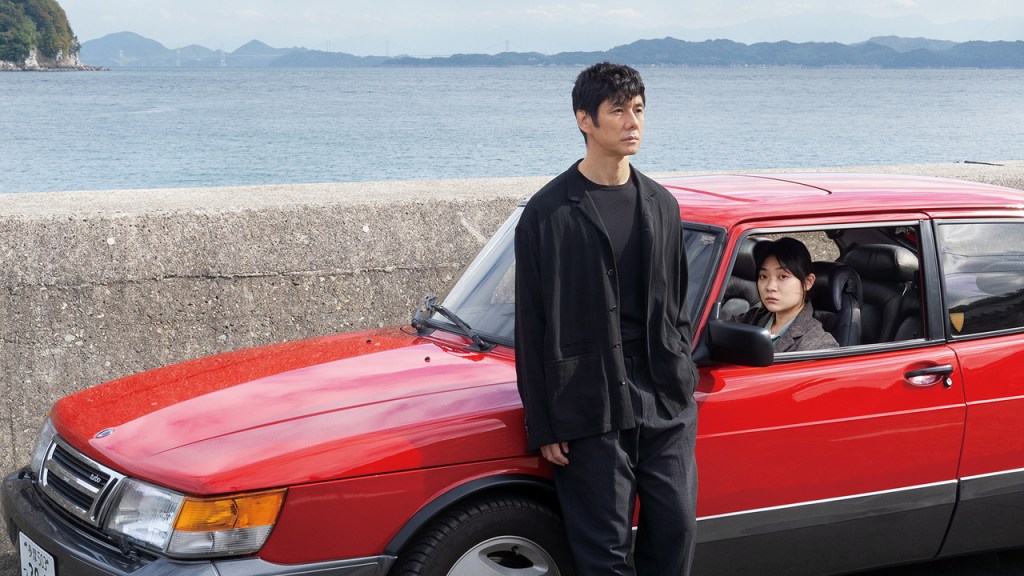
Ryûsuke Hamaguchi · Hidetoshi Nishijima, Tôko Miura, Reika Kirishima · PG-13 · 2h 59m · 2021
Ryusuke Hamaguchi, a significant figure in recent Japanese cinema, presents his latest movie “Drive My Car” (original title: Doraibu mai kâ), based on Haruki Murakami’s short story of the same name from the book “Men Without Women.” The movie had its world premiere at the Cannes Film Festival and also received the “Best Screenplay” award.
In “Drive My Car,” we witness the journey of Yusuke Kafuku, a successful theater director who mourns the loss of his wife, and simultaneously explore his personal world. Kafuku, a character in mourning, is invited to stage Anton Chekhov’s play “Uncle Vanya” at a festival in Hiroshima. The festival assigns him a 20-year-old female driver. Unexpectedly, Kafuku’s interactions with the mysterious driver lead to a series of journeys infused with solitude, loss, grief, and mutual revelations.
The movie approaches characters patiently and delicately, guiding the audience to contemplate human nature, the power of language, and self-discovery. Kafuku’s thoughts on relationships, loyalty, commitment, and acting take center stage.
In the movie “Drive My Car,” we follow the life of a theater director named Kafuku (Hidetoshi Nishijima) and his evolving relationship with Misaki (Tôko Miura), a driver he initially distances himself from. However, the director takes a broader perspective to delve into Kafuku’s world and surroundings. Kafuku is portrayed not only as an actor but also as a creative writer and avant-garde theater director, giving depth to his character.
Director Hamaguchi provides a multifaceted view of characters and events, unveiling the core elements of the story to the audience. By making Murakami’s elements transparent and integrating them into the foundation of a complex narrative, Hamaguchi complicates connections and loosens cause-and-effect relationships.
In the approximately 40-minute opening scenes of the movie, we witness Kafuku’s perspective on his late wife, Oto. With Oto’s sudden death, Hamaguchi intentionally leaves Kafuku and the audience alone.
Two years after his wife’s passing, Kafuku gets involved in a theater festival in Hiroshima to stage “Uncle Vanya.” While attempting to adapt Chekhov’s text to his unique style, he continues his habit of recording the play’s lines onto tapes in his car, listening to the voice of Oto. Through Oto’s recorded voice, Hamaguchi seamlessly integrates Chekhov’s “Uncle Vanya” into the movie’s universe, shaping it as both a backdrop and a foundation. The movie uses Chekhov’s text as a tool to create different narrative layers.
Nevertheless, “Drive My Car,” a movie that advocates art as a means to better understand human nature, can be described as an introspective exploration influenced by the director’s touch, dissecting loneliness.
“Drive My Car” meticulously explores the silent moments between Kafuku and driver Misaki. Hamaguchi maintains a patient approach throughout the movie, avoiding any rush. However, this can also be considered a drawback, as some scenes are prolonged enough to potentially distract the audience’s attention.
Nevertheless, “Drive My Car,” a movie that advocates art as a means to better understand human nature, can be described as an introspective exploration influenced by the director’s touch, dissecting loneliness.
 Auteur Avenue