
Ari Aster · Joaquin Phoenix, Patti LuPone, Amy Ryan, Nathan Lane · R · 2h 59m
“Beau is Afraid” is a mesmerizing cinematic experience that delves into profound themes, accompanied by Joaquin Phoenix’s exceptional acting. With its successful exploration of postmodernism and the incorporation of captivating animation sequences, the film pushes the boundaries of traditional storytelling. It weaves together fragmented narratives, challenges our perception of reality, and offers a thought-provoking journey into the depths of the human psyche.
The film tackles a range of themes, touching upon the complexities of human nature, the blurred lines between reality and illusion, and the cyclical nature of human behavior. “Beau is Afraid” invites viewers to question their own perceptions and interpretations of reality, as it explores the fragmented nature of our modern world. It is through this exploration that the film embraces the spirit of postmodernism, challenging traditional narrative structures and engaging audiences on multiple intellectual and emotional levels.
At the heart of the film lies Joaquin Phoenix’s extraordinary portrayal of Beau, a character tormented by internal conflicts and insecurities. Phoenix’s acting prowess shines through in every scene, immersing viewers in the depths of Beau’s psyche. His ability to convey a wide range of emotions with subtlety and nuance is truly remarkable. Phoenix’s performance serves as the anchor of the film, grounding it in a sense of raw authenticity and emotional depth. It is through his remarkable acting that the audience becomes fully invested in Beau’s journey.
The film’s success as a postmodern work lies in its deliberate fragmentation and non-linear narrative structure. Drawing inspiration from various sources, “Beau is Afraid” weaves together different timelines, genres, and perspectives, challenging the traditional notion of linear storytelling. This fragmentation mirrors the fragmented nature of our contemporary world, where truth and reality often appear elusive. By immersing viewers in a disorienting narrative experience, the film encourages active engagement and prompts us to question the constructs of storytelling and the boundaries of reality.
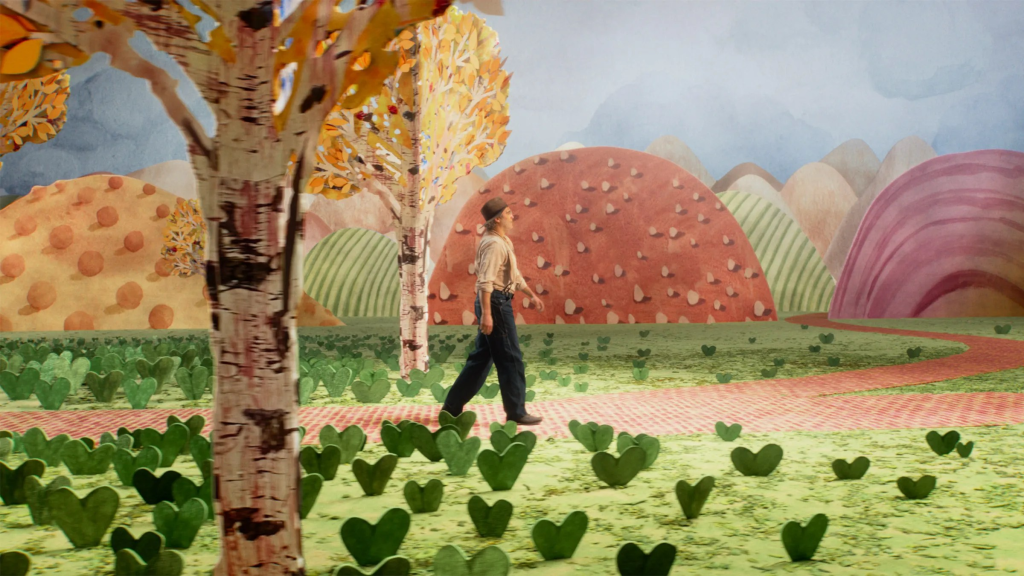
In addition to its narrative prowess, “Beau is Afraid” astounds with its visually captivating animation sequences. These sequences act as a metaphorical window into Beau’s subconscious, allowing viewers to witness his fears, desires, and the symbolism that permeates the story. The animation serves as a bridge between reality and imagination, creating a visually stunning and emotionally resonant experience. It further enhances the film’s postmodern aesthetics and enriches the storytelling by adding an additional layer of depth and complexity. This artistic choice not only showcases the director’s creative vision but also serves as a testament to the film’s willingness to experiment and push the boundaries of conventional storytelling.
In conclusion, “Beau is Afraid” emerges as a triumph of postmodern cinema, propelled by Joaquin Phoenix’s exceptional performance and innovative storytelling techniques. The film pushes the boundaries of traditional narrative, immersing audiences in a fragmented and thought-provoking experience. Through its exploration of postmodern aesthetics, the film challenges our perceptions of reality and invites us to actively engage with the story. The incorporation of the mesmerizing animation sequence further enhances the film’s impact, offering a visually stunning and emotionally resonant depiction of Beau’s inner world. “Beau is Afraid” is a testament to the power of cinema as an art form and stands as a must-see for those seeking a truly unique and transformative cinematic experience.
 Auteur Avenue