
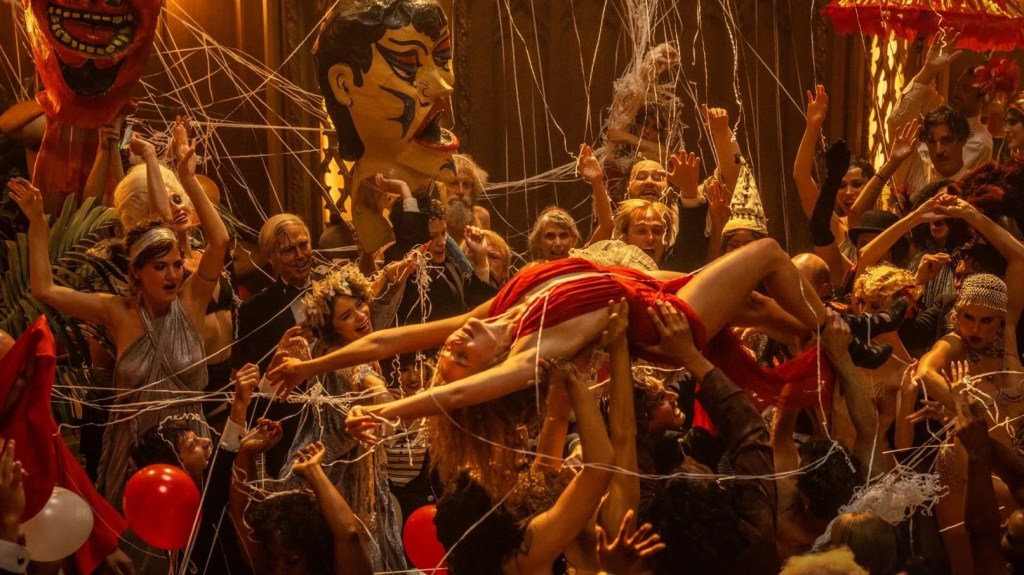
Damien Chazelle · Margot Robbie, Brad Pitt, Diego Calva · R · 3h 9m
Damien Chazelle met with the audience again with “Babylon”, his first film since “First Man” (2018) and his most ambitious work to date. The film is a period drama set in Hollywood during the transition from silent films to sound films in the late 1920s. The film chronicles Manny, Nellie, and Jack’s efforts to find their way in a changing industry and achieve great things in Hollywood.
Chazelle, who draws the audience to a particular time and place with “Babylon” as in her previous works, creates a lively and immersive world by using her unique visual style and meticulous attention to detail. Chazelle’s use of music is another important similarity between “Babylon” and her previous work. Music played a central role in storytelling in “Whiplash” and “La La Land” and the same goes for “Babylon”. Composed by his frequent collaborator Justin Hurwitz, the soundtracks are a stunning mix of original compositions and 1920s classic tunes. The music, seamlessly integrated into the narrative, heightens the film’s emotional impact and draws the viewer into the world of 1920s Hollywood.
Another similarity between “Babylon” and Chazelle’s previous works is its focus on the price of ambition. In “Whiplash,” the protagonist’s relentless pursuit of perfection comes at a huge personal cost, while in “La La Land” the characters must face the compromises they have to make to pursue their dreams. In “Babylon,” the characters must find their way in a rapidly changing film industry and make tough choices to succeed.
The most important difference between “Babylon” and Chazelle’s previous works is that the film contains a more open political and social commentary. Addressing issues of identity and social class in her previous work, Chazelle openly explores race, gender, and power in Hollywood in the late 1920s in “Babylon”. The film’s portrayal of the challenges faced by women and people of color in Hollywood during this period is particularly noteworthy. The film’s handling of these issues feels both timely and timeless.
One of the most striking visual elements in the film is the use of color. Together with cinematographer Linus Sandgren, Chazelle uses a rich and vibrant color palette that captures the glamor and glitz of 1920s Hollywood. The colors are bold and saturated; reds, blues, and yellows create a dreamy atmosphere.
Chazelle also uses colors to create contrast in the characters’ worlds. The lavish parties of the wealthy Hollywood elite are often bathed in warm, golden hues, while the less glamorous and more grounded scenes are shot in cooler, quieter tones. This contrast highlights the gulf between the two worlds and highlights the difficulties the characters face as they try to move from one to the other.
Moreover, the use of color also highlights the emotional journeys of the characters. As the story progresses, the colors become more subdued and muted, reflecting the struggles and losses of the characters. This change in color palette adds emotional depth to the film, conveying the mood and tone of the story.
As a result, the use of color is one of the key elements of visual storytelling in Babylon. The vibrant and bold color palette captures the glitz and glamor of 1920s Hollywood, emphasizing the contrasts between the worlds of the characters and their emotional journeys. Overall, the film’s use of color is visually striking and an effective element for storytelling.
All in all, “Babylon” is a striking and ambitious film in which Chazelle continues to explore themes of ambition, obsession, and the pursuit of perfection. While the film’s attention to detail, the use of music and color, and the theme focus carry traces of Chazelle’s previous films, it differs from previous films with its more explicitly political and social interpretations. Overall, “Babylon” is a masterful film that cements Chazelle’s place as one of the most exciting and innovative directors of our time.
 Auteur Avenue